Author: Vikas
If you live in the U.S., you’ve probably seen the lines at convenience stores whenever the Powerball jackpot gets huge. Maybe you’ve even heard a coworker say, “Someone’s got to win it.” That’s exactly what makes Powerball so popular—it gives everyday people the chance to dream about a life-changing payday for just a couple of bucks.
Of course, most players know the odds are incredibly long. Still, every drawing creates excitement because someone, somewhere, eventually wins. So, if you’re new to Powerball or just curious about how it works, here’s a straightforward guide without all the confusing lottery jargon.
What Is Powerball?
Powerball is one of the largest lottery games in the United States, available in most states, Washington, D.C., Puerto Rico, and the U.S. Virgin Islands. It’s known for producing some of the biggest jackpots ever awarded, with prize pools that can climb into the hundreds of millions—or even over a billion dollars when the jackpot rolls over multiple times.
Unlike many smaller lottery games, the jackpot doesn’t reset after every drawing. If nobody matches all the winning numbers, the prize rolls over, making the next drawing even bigger. That’s usually when you see news coverage everywhere and ticket sales spike across the country.
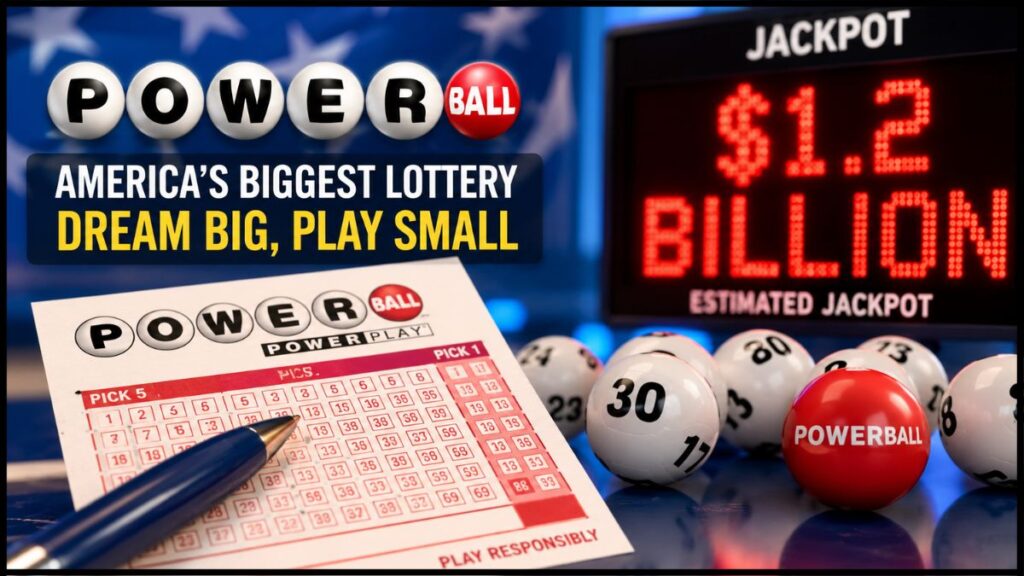
How Does Powerball Work?
The game itself is surprisingly simple.
When you buy a ticket, you’ll choose:
- Five numbers from 1 through 69
- One Powerball number from 1 through 26
Don’t feel like picking your own numbers? You’re definitely not alone. Many players simply use Quick Pick, where the lottery terminal randomly generates the numbers. Interestingly, plenty of jackpot winners have won using Quick Pick instead of choosing birthdays or lucky numbers.
A standard ticket costs $2, and for an extra $1, you can add the Power Play option, which increases many non-jackpot prizes.
Do You Have to Hit the Jackpot to Win?
Not at all.
One of the biggest misconceptions about Powerball is that you either win the jackpot or walk away empty-handed. In reality, there are several prize levels based on how many numbers you match.
Even matching only the Powerball can earn you a prize, while matching additional white balls increases your winnings. Of course, matching all five white balls plus the Powerball is what lands the life-changing jackpot.
What Are the Odds?
Here’s the reality.
The odds of winning the Powerball jackpot are about 1 in 292.2 million.
Those aren’t great odds—and most players know it. But that’s also why the jackpots become so massive. Since jackpot winners are rare, the prize keeps growing until someone finally matches every number.
If you’re playing, it’s best to think of it as entertainment rather than a way to make money.
Why Do So Many Americans Play?
Powerball isn’t just about winning—it’s about the experience.
When jackpots get unusually large, office lottery pools pop up, family members chip in together, and conversations about “what I’d do if I won” become surprisingly common. For a couple of dollars, people enjoy imagining what life would look like without a mortgage, student loans, or financial stress.
That’s a big reason why Powerball has remained popular for decades.
Can You Stay Anonymous If You Win?
The answer depends on where you bought your ticket.
Some states allow lottery winners to remain anonymous, while others require winners to publicly identify themselves before claiming the prize. Because lottery laws vary by state, it’s always smart to understand your local rules before collecting a major win.
Is Powerball Worth It?
If you’re buying tickets expecting a guaranteed return, probably not.
But if you see it as a fun form of entertainment—similar to paying for a movie ticket or a night out—then spending a couple of dollars every once in a while can be enjoyable.
The smartest approach is to play responsibly, stick to a budget, and remember that Powerball is a game of chance. Every drawing creates new possibilities, and while the odds are long, that’s exactly what makes every jackpot headline so exciting.
At the end of the day, Powerball isn’t really about statistics. It’s about hope, excitement, and the simple thought that maybe, just maybe, the next winning ticket could be yours.